Family Roles From
Family Systems Therapy -
Coping With Chronic Illness
On this page I discuss family roles which you may take on when young.
These roles can become rigid such that your self esteem is entwined with behaving in a certain way, either within the family or possibly in all of your relationships.
The adoption of psychological roles within the family is part of the model put forward by Family Systems psychology.
Becoming informed about family systems and letting go of the compulsion to occupy a rigid role can be an important part of healing the past and creating a new future.
If you are living with chronic illness it can be all the more important to challenge these roles in order to give yourself permission to rest, to ask for help, and to feel and maybe express some of the feelings which arise.
Working with family roles can help to answer the questions below.
If you are looking for advice on how to cope with a change or challenge in your life other than chronic illness, please adapt these questions as needed.
- How do I adapt and find a life within illness?
- How do I adjust to a new self image now I am unable to perform the family systems role I once did?
- How can I heal from the compulsion to behave in ways (perform a family role) that are not possible at my current level of health?
- How can I gain the behavioural flexibility I need to (break out of a role) live life with this new situation?
- How can I use illness as an opportunity to challenge and change patterns of behaviour that are not contributing to my greatest possible sense of well-being?
To receive Releasing Judgment, a FREE ebook
or just to keep in touch, sign in below.
Your email will definitely not be misused
and you can unsubscribe at any time.
With love, Katherine
For the many years I was living with severe ME/CFS, I explored psychology self help and spiritual practices to help me keep my sanity, survive physically and increase my chances of being healed. Looking at family roles was part of that journey of self growth.
Contents for Family Systems Roles
FREE
Forgiveness E-Book
From the author of this website,
please help yourself :-)
Your email will definitely not be misused!
Katherine
- How Can Family Roles Lead to the denial of the illness of a family member?
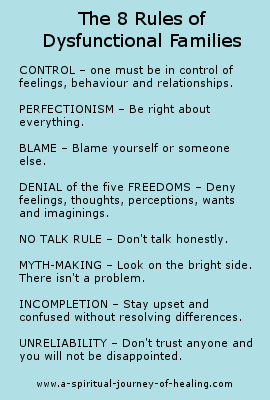
- In a Dysfunctional Family, the Family Systems Roles become rigid
- Why Break out of a Family Systems Role? Can you afford not to?
- How Can Family Systems Therapy Help You to Heal the past and Move forwards on your journey of self discovery?
- Living with Illness for me meant giving up the role of Caretaker
- A List of Family Roles In Family Systems Therapy
- Or move to another website to look in more detail at:
A List of Family Systems Roles You May Have To Give Up In A Time of Illness
The Caretaker
The Lost Child
The Star Hero
The Listener
The Busy One
Mummy’s Helper
How can family roles lead to the denial of the illness of a family member?
Are you asking:
- "Why are my family being so unsympathetic when I am ill?"
- "How do I deal with my family now I am ill?"
- "Why are they acting as though they don't believe me?"
Reading about family systems roles may help you gain insight into why your family are in denial about the illness, and help you to give yourself the understanding and adaptability you need.
When I became ill with ME/CFS, my family were angry rather than
sympathetic. Their reaction inclined me towards my own denial of the
illness.
After all, if I was ill, they would be helpful and sympathetic, wouldn't they? Learning about family roles made sense of this family behaviour.
Click through for psychology self help
It was as though there was an unwritten rule that I was not allowed to be ill.
Reality was being ignored by the family, often including myself.
I came to think of it as the members of the family having an outdated map of the world - one on which the illness was not marked. (When I returned to walking and talking again, I trained in the modality of NLP. I discovered that "map of the world" is actually a term used in NLP (NeuroLinguistic Programming).
We all have our own maps of the world. They are all different and our maps may be more accurate in some places than in others.
My 'living with illness' was not written on the family map. Instead of updating the map, the family tried to carry on as though I was still well.
As I became more ill, the illness became increasingly visible. This meant the family mostly stayed away.
When they did visit, they found it very stressful.
I
found it stressful! Their words – and sometimes their expectations –
revealed an outdated image of me – an image of me as a well person.
In a Dysfunctional Family, the family roles become rigid
Family roles are taken up in every family and are not unhealthy of themselves. The difference is that in a dysfunctional family they become rigid.
In a healthier family, the roles are chosen by the child as an adaptation to the family environment.
In a dysfunctional family, the roles are not chosen by the child, but assigned by the circumstances and tensions within the family.
This idea of family system roles was very helpful to me in pursuing psychology self help.
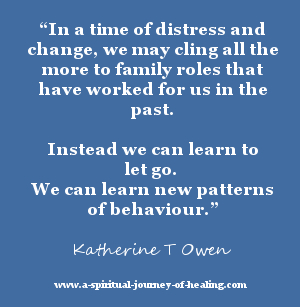
Why break out of a family systems role? Can you afford not to?
It is not easy to change. Many of us go through life behaving the same way and saying “This is just the way I am.”
When you are living with ME aka CFS or another chronic illness, you may develop a stronger motivation and clarity about why you want to change.
- You need to change for the sake of your health. For example, you may need to
learn to rest. Or learn to exercise. Or find the discipline to change your diet.
- You need to learn to put your own needs first at times, both for your sake and for the sake of those who love you. You and they want you as well and happy as you can be.
- You need to learn to feel OK about yourself even when you are not able to help others.
To be clear, when we are well again, we may once more fill these family roles in our new families or in our community.
The filling of the roles can be healthy.
But
it is not healthy when we are defined by these family systems roles to
the point where we are far from being in a place of choice, freedom and flexibility.
How can family systems roles help us to heal the past and move forwards on our journey of self discovery?
In my journey with psychology self help, family roles helped me to come to terms with the denial and anger of my family in a time of illness.
Recognising that I was assigned to play a certain role in the
family helped me stop looking to others for permission to take the
illness seriously.
My life, the people I attracted in my life, and my expectations were programmed not to allow myself to have problems.
I recognised that I needed permission to have an illness. I recognised that I needed to be the one to give myself the permission to be ill that I needed.
Living with illness meant giving up the role of caretaker
One of my family systems roles had been the role of Caretaker.
(For the definition of the Caretaker role, see below.)
I found it very hard when I got too ill to play my role as Caretaker.
I probably only gave up this role because I was forced out of it by physical limitations. In many ways, I continued to play this role even when severely ill. Carers feeding me would take the chance to tell me their problems, and even ask me for my advice.
I had to accept that my family chose not to adapt to chronic illness.
Sometimes, as you let go of playing a certain role, some people in your life will choose to move on or you will choose to let them go.
Women who love too much
An excellent psychology self help book on giving up the compulsion to look after other people is Women Who Love Too Much by Robin Norwood.
This role of caretaker applies to men too! It applies to anyone who finds it more comfortable to tend to the needs of another than to their own.
Click through to buy Women Who Love Too Much in the online Amazon shop. Hopefully, this link takes you to your nearest one. If not, my apologies!
Family roles help us see that a behaviour has a positive intention. There was a time when it made sense for us or another to take up these roles.
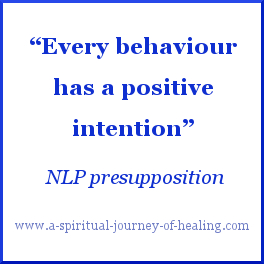
This NLP presupposition of recognising the positive intention behind our decision helps us to have self acceptance and compassion for ourselves for having taken on a certain family role. Change is always easier from a place of self-acceptance.
A List of Family Roles In Family Systems Therapy
FREE
Forgiveness E-Book
From the author of this website,
please help yourself :-)
Your email will definitely not be misused!
Katherine
The Caretaker definition – a child who takes on responsibility for the emotional-wellbeing of the family. Sometimes taking a role of parent to other children or to one or both of the parents.
The Problem or Family Scapegoat – the child who takes on the role of rebelling. They thereby often provide a distraction from marital difficulties. Focusing on the problem child leads to an agreement between the couple, thereby helping the couple to stay together.
The Lost Child family systems role– the child who sets aside her needs. Perhaps because they have been ignored. Perhaps in recognition that a parent is not able to meet those needs.
The Mascot or the Clown definition – uses comedy to allow the dysfunctional family system to continue to function. But equally, the comedy may help the family to avoid seeing that there is a problem that needs to be addressed.
The Star Hero definition – Does well at everything. The parent may be living through their child, using the child to fulfil their own dreams. The child may not actually be in touch with what she wants. She may also be working hard in order to feel OK about herself. The family system may have led her to believe she needs to earn her worth.
The Mastermind – This child manipulates the faults of those within the family to get what they want. This results in a feeling of a lack of safety. They have an inappropriate level of power over the authority figures in their life.
The Protected One – Information about dysfunction in the family may be kept from this member of the family. The member can feel excluded as a result and in later life may have a tendency to avoid difficulties rather than face them.
There are many family roles we can take on other than the main ones listed above.A List of Family Roles We May Have To Give Up In A Time of Illness
Please visit a website on healing for a list of family roles you may have to give up in a time of chronic illness and for self talk to help you to give yourself permission to behave in new ways.
Other pages related to Family Roles and How To Learn To Live With Illness:
Psychology Religion Spirituality - how the same, how different?
On a path of self growth, many of us explore psychology religion spirituality –approaches to how to be happy and have a good relationship with self. How are they the same, how different?
NLP Definition - Neurolinguistic Programming, An Explanation
NLP definition. What is Neurolinguistic programming? How do I stop my bad thoughts? How do I become more confident? Which NLP exercise can I use to get rid of this bad memory?
Psychology Self Help– John Bradshaw Psychology Books (Family Systems)
The psychology books of John Bradshaw led me on a journey of psychology self help. In severe illness I needed skills to adapt within the family system. Book review on The Family, Homecoming...


- Book Reviews for John Bradshaw Books on Family Systems Roles
- Being Blessed and A Blessing (in a time of illness)
- 7 Stages of Mourning the Loss Of Health
Return to read about other Psychological Approaches to better live with the illness Chronic Fatigue Syndrome / Myalgic Encephalomyelitis.
Or click on the link below to visit the home page.
- Home
- Let Go of Family Roles
Receive daily inspiration...
Receive daily inspiration by putting
your favorite (favourite) quote on
an item you see daily around your home-
a mug, cushion, postcard, coaster, T shirt etc.
You will find my zazzle gift store at
zazzle.com/HealingStore (USA)
Use one of my designs or start from a blank.
zazzle.co.uk/HealingStore (UK)
Thank you so much for supporting this website
www.a-spiritual-journey-of-healing.com
Katherine


My name is Katherine Owen.
Please respect my copyright as the author of this website.
I am delighted if you choose to share on social media, but please do NOT reproduce any of the contents of this page without permission.
© Katherine T Owen
Recent Articles


-
A prayer for the dead, the dying, and for one who grieves
Feb 11, 26 08:28 AM
 A prayer for the dead. Eternal rest. Short catholic Christian plea to rest in peace. Pray when someone has died. Grief, bereavement, mourning. For the dying.
 -
I am Blessed, I Am A Blessing – Self Worth In a Time of Sickness
Jan 04, 26 06:35 AM
 With sickness, you may think thoughts such as - I am always having to ask for something. I feel like a nuisance. Think again, saying, I am blessed and a blessing. Raise your self worth. Prayer. Quote…
 -
New Year Prayer
Dec 30, 25 01:43 PM
 New Year Prayer. Blessings. Handing over worry. Asking for God's guidance.