Bible Definition – Bible Vocabulary and References On This Site
These pages provides simple Bible definition and explanations. They are here to help if the Bible terms or spiritual terms used on this site are new or fairly unfamiliar.
As with the rest of the site, my views are not necessarily the views of traditional Christianity, though I am a Christian and definitely follow Jesus.
I speak about the point in my journey when I asked the question "Am I a Christian" in this blog.
Scroll down or click for terms relevant to bible definition as follows:
- The Old Testament
- The New Testament - Bible Definition
- The Gospels
- Paul The Apostle (opens new article)
- How Is The Catholic Bible Different From The Protestant Bible?
- The Pentateuch
- The Hexateuch
The Bible
The Bible is comprised of two main parts:
Bible Definition: 1. The Old Testament
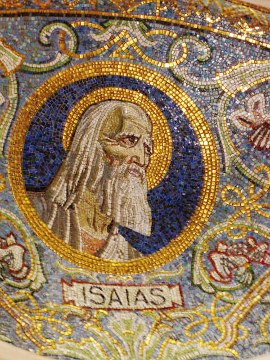
The Old Testament is a collection of books written at different periods between 1900 and 4000 years ago.
There are 39 books in the Protestant version.
There are 46 books in the Catholic version.
The book Christians now refer to as the Old Testament is a collection of Hebrew books. They were written by Jews for Jews.
Jesus was Jewish. He quoted from these scriptures and maintained their importance. He often interpreted them differently than his Jewish brothers, but insisted that he had come to fulfil the scriptures not to destroy them.
Christianity started as a cult of Judaism with many early Christians also adhering to Jewish Law. The group is referred to in the Bible as following "The Way".
The followers of Christ later separated from Judaism. They continued to refer to the Holy hebrew texts which were to become known as the Old Testament.
Further books were written and included within their scriptures.
A List of Books in The Old Testament:
Genesis
Exodus
Leviticus
Numbers
Deuteronomy
Joshua
Judges
Ruth
First book of Samuel
Second book of Samuel
First book of Kings
Second book of Kings
First book of Chronicles
Second Book of Chronicles
Ezra
Nehemiah
Esther
Job
Psalms
Proverbs
Ecclesiastes
Song of Songs (Song of Solomon, Canticles)
Isaiah
Jeremiah
Lamentations
Ezekiel
Daniel
Hosea
Joel
Amos
Obadiah
Jonah
Micah
Nahum
Habakkuk
Zephaniah
Haggai
Zechariah
Malachi.
Catholic Bibles are different from Protestant Bibles.
The Catholic Church split in the sixteenth century with the formation of the Protestant denomination.
The Protestants chose to only include Bible books for which the original Hebrew copies could be found, with the exception of the Book of the Apocalypse or Revelations which was included.
I am not an expert, so if you are researching the reason for the exclusion on certain books in the Bible, please do check on that information.
Since that time copies in Hebrew have been found of some of the books of the Bible that were excluded, but I don't know which ones.
The list of the extra books included in Catholic Bibles is included further down in this article on Bible definition.
Bible Definition: 2. The New Testament
The New Testament was written after the time of Jesus.
The New Testament consists of 27 books, written in Greek, primarily by Jews.
Luke the historian who wrote one of the Gospels was however a gentile (a non-jew).
Bible Definition: A List of Books in The New Testament
- The Gospels
- The Acts of the Apostles
- Epistles by Paul
- Epistles by other apostles
- Revelation aka Apocalypse
The Gospels
There are 4 Gospels, giving slightly differing versions of the life and ministry of Jesus.
Gospel according to St. Matthew
Gospel according to St. Mark
Gospel according to St. Luke
Gospel according to St. John
The Gospels include many words presented as being the direct teachings of Jesus.
Although they appear in the Bible in the order above, Mark is believed to be the earliest Gospel, begun around 30 years after the Crucifixion.
Around the year 180 a.d., bishop Irenaeus declared the accounts by Matthew, Mark, Luke, and John to be the four "canonical" Gospels.
(The full contents of the New Testament were decided on in the time of Constantine around 325, at the time of the Council of Nicaea.)
The Acts of the Apostles
The Acts of the Apostles is a fascinating account of the early church by Luke the Historian who also wrote one of the Gospels.
Epistles by Paul
Letters written by Paul to encourage the early Church to persevere in following Christ and not split into factions and get distracted by frivolities and unncessary theological arguments. Encouragement was much needed as persecution of the early Christians was common.
Epistle to the Romans
First Epistle to the Corinthians
Second Epistle to the Corinthians
Epistle to the Galatians
Epistle to the Ephesians
Epistle to the Philippians
Epistle to the Colossians
First Epistle to the Thessalonians
Second Epistle to the Thessalonians
First Epistle to Timothy
Second Epistle to Timothy
Epistle to Titus
Epistle to Philemon
Epistle to the Hebrews
Epistles by other apostles
Other apostles were also travelling about to spread the Good News. They also wrote to encourage the early Christians to continue in the faith.
Epistle of James
First Epistle of Peter
Second Epistle of Peter
First Epistle of John
Second Epistle of John
Third Epistle of John
Epistle of Jude
Revelation aka Apocalypse
I don't really feel qualified to give a bible definition of Revelation. It is quite a controversial book. It is the one most used by those who want to instill fear of the “Last Days” to encourage people to take up faith. Revelation, also known as Apocalypse, can be pretty grizzly at times. Most feel they don't really understand much of it.
There is however much I find beautiful and poetic in Revelation and relate to.
The
name Apocalypse is now associated with disaster, but it means
“unveiling”. Throughout the Bible and in many spiritual groups, there is
reference to a veil between this world and the spiritual realm. In
moments of revelation this veil is removed. Revelation, the book, gives
account of when this veil is removed, not just on an individual level,
but on a collective level.
How Is The Catholic Bible Different From The Protestant Bible?
I personally own both Catholic and Protestant
Bibles.
I was raised Catholic in the Protestant country of the UK.
I attended a nominally Protestant primary school and attended Brownies (a worldwide group which provides activities for young girls who then go onto become girl guides).
I have always had exposure to both these threads of Christianity though primarily through Catholicism.
This is not an official catholic bible definition.
The following are some
of the differences between the Catholic and Protestant Bibles of which I am aware.
a) What are the extra books contained in Catholic Bibles and not in Protestant Bibles?
I believe these are referred to as the deutero-canonical books.
- Tobit
- Judith
- Additions to Esther (Vulgate Esther 10:4-16:24[14])
- Wisdom
- Sirach, also called Ben Sira or Ecclesiasticus
- Baruch, including the Letter of Jeremiah (Additions to Jeremiah in the Septuagint[15])
- Additions to Daniel: Prayer of Azariah and Song of the Three Holy Children (Vulgate Daniel 3:24-90), Susanna (Vulgate Daniel 13, Septuagint prologue), Bel and the Dragon (Vulgate Daniel 14, Septuagint epilogue)
- 1 Maccabees
- 2 Maccabees
I don’t know much about the other texts in the list above, but I can recommend the book of Wisdom as well worth reading.
The book of Wisdom is quoted by the writers of the New Testament.
In the book of Wisdom, Wisdom is used as another name for God. Wisdom is also referred to as "She". (The same is true in the book of Proverbs.)
b) The Catholic Bible includes the original words used to name God - Yahweh and Elohim. These have been replaced in the Protestant Bibles with the word LORD - left in capitals to indicate that it is a replacement.
c) The Jerusalem Bible (a Catholic Bible) is the
only Bible I own that includes the latest thought about who wrote the various Chapters of the Bible.
For some Protestant Christians it would be unusual to challenge the belief that
parts of the Bible are written by someone other than the named author.
For example Isaiah by Isaiah, Jeremiah by Jeremiah.
d)
The translations are different in the Catholic and Protestant bibles so
the wording often varies. These differences in translation do not however explain differences in doctrine between denominations. There are equally significant differences in
translations between different Protestant bibles and different Catholic
Bibles.
The Pentateuch
What are the first five books of the Old Testament called?
The first five books of the Bible are known as both the Torah and the Pentateuch.
The Hexateuch
What are the first six books of the Old Testament called?
(This is sometimes a crossword clue?!)
Some scholars group the first six books of the Bible together, rather than the first five.
The sixth book is the book of Joshua.
Joshua contains many references to the first five books and is therefore considered by some as distinct from the other books of the Former Prophets (Joshua-Kings).
The Gnostic Gospels
The Gnostic Gospels are Gospels in addition to Matthew, Mark, Luke and John which existed in the early centuries and have been found subsequently.
Although they are not part of a Bible definition as they are excluded, the Gnostic Gospels are of spiritual and academic interest to many.
There are thought to be about 50 Gnostic Gospels.
Especially significant are the Nag Hammadi gospels found in 1945. These include the Gospel of Thomas, the Gospel of Mary, and the Gospel of Philip.
(Also among the Nag Hammadi scrolls were the Prayer of the Apostle Paul and an excerpt from Plato's Republic.)
In the 1970s, the Gospel according to Judas, dated to the second century, was found in a cave in Egypt. It became available to read in 2006.
With grateful thanks to the National Geographic Magazine 2017, for some of the above information.
The Bible is the best-selling book in history...by far
Some of the articles on this website which include Bible Verses:
Other Spirituality Definitions on www.a-spiritual-journey-of-healing.com
(Click here if you are looking for scriptures on healing in the bible.)
- Definition of Spirituality and Definition of Religion
- Definition of non duality. (Christianity and non duality - how this teaching has deepened my experience of God's Love.)
- Fear and Faith Definition
- Definition of Forgiveness
- What is Prayer?
- What is a prayer of agreement?
Move from Bible Definition to read about how to use spiritual quotes - including those from the Bible as part of your spiritual practice.
Receive daily inspiration...
Receive daily inspiration by putting
your favorite (favourite) quote on
an item you see daily around your home-
a mug, cushion, postcard, coaster, T shirt etc.
You will find my zazzle gift store at
zazzle.com/HealingStore (USA)
Use one of my designs or start from a blank.
zazzle.co.uk/HealingStore (UK)
Thank you so much for supporting this website
www.a-spiritual-journey-of-healing.com
Katherine


My name is Katherine Owen.
Please respect my copyright as the author of this website.
I am delighted if you choose to share on social media, but please do NOT reproduce any of the contents of this page without permission.
© Katherine T Owen


To receive
Releasing Judgment,
a FREE ebook
or to keep in touch...
Please be assured - I will NOT pass on your e-mail address to anyone else.
Be Loved
Beloved
15 Spiritual Love Poems
God Love Self Love
(by the author of a-spiritual-journey-of-healing.com)
For 14 years, Katherine T Owen was severely disabled with Myalgic Encephalomyelitis, unable to walk, with little speech, and with inadequate care.
Katherine's small beautiful collection of poems take the reader with her as she journeys to know both self love and
God's love.

If you don't have a kindle, you can download FREE software to read the kindle book on your computer.

Click to preview or BUY
the PAPERBACK of
Be Loved Beloved
"One thing that struck me was the stripping of ego in the work. Most of us have a comfy ego façade, but weakness and disease tore Katherine’s away. The poems in Be Loved Beloved come from the heart."
Dana Taylor, Author of Ever-Flowing Streams: Tapping into Healing Energy
What's New?


-
Spiritual Self Worth quotes and themes
 Spiritual Self Worth - Bible quotes. God often asks us to hold our head high. To wear our crown. We are invited to be radiant.
 -
How To Use Spiritual Quotes as part of Daily Spiritual Practice
 I use spiritual quotes from the Bible and ACIM as part of my daily spiritual practice. Why and how to use spirituality quotations and verses from our holy books? The benefits.


